What to Wear in Florence: A Seasonal Packing Guide
Updated: Oct 27
Updated October 2026


I have packed for Florence in February cold, June heat and March showers, and I no longer overthink it. My one rule: if it is even a little cloudy, bring the umbrella. Here is what I pack by season, and best time to visit Florence covers the weather and crowds.
Spring (March to May)
Layers: a light sweater and a trench or light jacket.
A compact umbrella. Spring showers are common.
Comfortable closed shoes that handle wet stone.

Summer (June to August)
Breathable linen and cotton. Florence sits in a valley and gets very hot. On my late June trips I pack two shirts a day.
A hat, sunglasses and a refillable bottle for the public water fountains.
A light scarf or shawl to cover shoulders in churches.
Autumn (September to November)
Light layers early, a proper jacket by November.
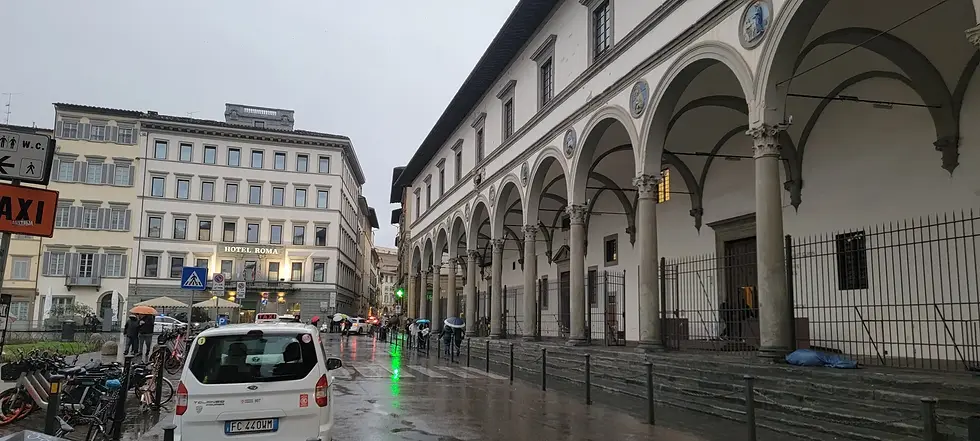
Water-resistant shoes. Autumn is one of the rainier times of year.
Winter (December to February)
A warm coat, scarf and gloves. Damp cold feels colder than the number suggests.
Boots with grip for slick cobblestones.

Church dress codes
The Duomo, Santa Croce and other churches expect covered shoulders and knees, and staff do turn people away. Carry a scarf you can wrap on, and avoid very short shorts on sightseeing days. Hats come off inside.
Shoes for cobblestones
This matters more than anything else. Florence is a walking city of uneven stone. Pack broken-in sneakers or flat leather shoes, and leave stilettos for the taxi-to-dinner nights. Climbing the dome means 463 steps, so wear something supportive.
Packing checklist
Comfortable walking shoes plus one smarter pair
Scarf or shawl for churches
Compact umbrella
Refillable water bottle
Crossbody bag that zips
European plug adapter (Italy uses types C, F and L)
Room in your bag for shopping; see my luxury shopping in Florence guide
More day-to-day advice is in my Florence travel tips and Florence tourist mistakes guide.
Where to stay
Not sure which area suits you? Read where to stay: my neighborhood FAQ.
What Florentines actually wear
Florentines dress neatly without looking fussy. Think dark jeans or chinos, a good knit or a crisp shirt, a tailored jacket and leather shoes or clean minimalist sneakers. Women favor midi skirts, wide trousers, silk scarves and leather bags.
Colors are muted: navy, camel, olive, grey and white. Athletic wear is for the gym or a run along the river, not for a museum or dinner. You do not need designer labels, just clothes that fit well and look cared for.
Packing for Tuscany day trips
If you are heading into the countryside, add a few things. Sturdy shoes for gravel roads and hill town lanes, a light jacket for breezy evenings in the hills, and sunscreen, because there is little shade between vineyards.
For a winery visit, smart casual is right, and darker colors hide a spilled glass of Chianti. My Tuscan towns day trip guide has ideas.
Dressing for dinner
Evenings are a little dressier. Men are fine in a collared shirt and trousers, with a jacket for fine dining. Women often wear a dress or tailored trousers with flats or block heels. At Michelin restaurants and grand hotel bars, smart dress is expected. See my romantic restaurants guide for where to dress up.
Month by month at a glance
January and February: cold and often damp. Coat, scarf, boots.
March and April: changeable. Layers and an umbrella.
May and June: warm days, mild evenings. Light layers.
July and August: very hot. Linen, a hat and sandals with support.
September and October: warm days and cooler nights. A light jacket.
November and December: rainy and chilly. A waterproof coat and good shoes.
My month-by-month guide to Florence has more detail on each month.
Tech to bring
A power bank for long photo days, an adapter for Italian sockets and offline maps of the center. Most hotels and cafés have free wifi.
Bags and safety
A crossbody bag that zips is the most useful thing you can bring. Pickpockets work the busy places: the buses, the Ponte Vecchio, the Duomo square and the station. Keep your phone in a front pocket and your passport in the hotel safe, and carry a copy of it on your phone instead.
Packing light
Florence's stairs, cobbles and small elevators make a big suitcase a burden. I travel with a carry-on and a soft bag, choose a palette of colors that mix, and plan on one load of laundry for a longer trip. Many apartments have a washing machine, and laundromats are easy to find.
Rain and heat strategy
For rain, a packable waterproof jacket beats an umbrella in a crowded street. For heat, plan indoor museum time from noon to four, and carry a scarf for churches that also shades your neck.
What to wear for the Duomo climb
Climbing the dome means 463 steps, many of them narrow and steep, with low passages and spiral sections. Wear flat, closed shoes with grip, and leave bulky bags behind; large backpacks are not allowed, and luggage cannot be taken in.
In summer, the stairways are hot, so bring a small bottle of water and wear light, breathable clothes. If you plan to enter the cathedral the same day, carry a scarf or light layer to cover shoulders. The bell tower, with 414 steps, needs the same preparation.
Packing for the countryside
Day trips into Chianti, the Val d'Orcia or the hill towns mean more walking on uneven ground and gravel paths. I pack sneakers or walking shoes with good soles, a hat, sunscreen and a light jacket, since hilltop towns are often windy and cooler than Florence.
For wine tastings, I wear comfortable but neat clothes: estates are working farms, and cellars are cool even in summer. If you plan to cycle or hike, bring proper gear and a small daypack.

Clothes for a villa stay
If you are staying in a Tuscan villa, pack for an easy, relaxed life: swimwear, a cover up, sandals for the pool, sneakers for country walks and something a little smarter for dinners out. Evenings in the hills are cool even in summer, so bring a sweater. Many villas have washing machines, which means you can pack lighter.
What not to pack
Skip high heels: cobblestones and stone streets are hard on them, and they are dangerous on wet days. Leave flashy jewelry and designer logos at home. Avoid packing too many outfits: you will want room for things you buy. Plug adapters are worth bringing, but hair dryers usually are not, since most hotels provide them.
Laundry on the road
For longer trips, I wash small items in the sink and use a laundromat for the rest. Florence has self service laundries in most neighborhoods, and many hotels offer a laundry service. This lets me travel with a carry-on even for two weeks.
My carry-on list
Two pairs of shoes, one pair of dark trousers, one pair of jeans, three tops, a light sweater, a jacket for the season, a scarf, a small umbrella and a crossbody bag. Everything mixes and matches, and nothing needs ironing.
A note on footwear in rain
Florence's stone paving gets slick when wet. In autumn and winter I pack shoes with rubber soles, not leather, and they make a real difference on the bridges and piazzas.
FAQ
What should I not wear in Florence?
Skip very short shorts and bare shoulders on church days, and avoid shoes that cannot handle cobblestones.
Do I need an umbrella in Florence?
In spring, autumn and winter, yes. Showers come in quickly.
Can I wear shorts in Florence?
Yes in the street in summer, but cover knees and shoulders for churches. Carry a light scarf or wrap.
What shoes are best for Florence?
Broken-in sneakers or flat leather shoes with good grip for the stone streets.
Do I need a jacket in Florence in summer?
Usually not during the day, but a light layer helps on evenings in the hills and in air-conditioned museums.
To match your packing to the forecast, see my guide to Florence weather by month.
About the author
I'm Jason GaNung, and I write every guide on Florence Life. I have spent extensive time in Florence over many trips, and I have stayed in many of the hotels and villas I cover, so my picks come from my own stays, not press releases. More about me.
Read next
Plan my stay
Packing is easier when you know where you are staying. Plan my Florence stay


Comments